

Excursions
Hoi An Highlight Tour (Chan May Port)
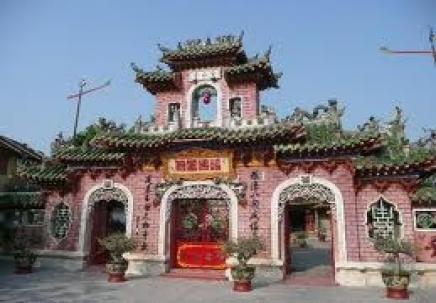


Hoi An Highlight Tour (Chan May Port)
(Vietnam)- Although it traces its trading roots to the Cham era, Hoi An (known to Europeans as "Faifo") gained its reputation as a central port frequented by Chinese. As the river began to silt up in the 1800s, the French chose nearby Da Nang as the next commercial center of central Vietnam. Today, Hoi An dose a brisk business in the tourist trade. Merchants' mansions, ornate Chinese assembly halls, and laid-back charm - plus over 100 quality tailoring shops - win over travelers' hearts. Hoi An is also a UNESCO World Heritage Site, as is nearby My Son with its Champa ruins. Every day, especially during the full and new moon festivals each month, Hoi An works extremely hard for the tourist. Tourists overrun the town and tend to stay twice as long as they'd planned. One visit and you will find it hard to blame them.
- This trip includes:
- Round trip transportation from the cruise port
- English-speaking private guide/driver for 8 hours
- Admission tickets
- This trip excludes:
- Meals & Tips
TOUR DETAIL
Itinerary:
Cruise Terminal Pick Up >> Phuc Kien assembly hall >> Hoi An Museum of historic and cultural >> Japanese Covered Bridge >> My Son >> Return to Cruise Terminal
Point of interests:
**Phuc Kien assembly hall - This one is the best choice for your ticket. Hoi An's oldest, largest, most colorful, and most complex structure, this hall was first constructed in 1697 by Fukienese immigrants who later rebuilt it in 1757. Past the pink columns of the Red Phoenix Gate, look down to see the symbol for longevity surrounded by five bats of happiness. (As if there was any other kind of bat) The first courtyard contains stonework and a statue called "Carp Contemplating a Moon." Above the inner archway, five bats frame the phrase "The goddess will give her follow man favor." This goddess is Thanh Mau, Holy Mother, Protectress of sailors, and goddess of the Sea. Just inside the main building, a mural depicts Thanh Mau preparing to rescue a ship from a wipeout-caliber wave. The main altar pays tribute to the congregation's ancestors' a smaller one to the right honors the God of Prosperity. (46 Tran Phu. Open daily 7am-6pm)
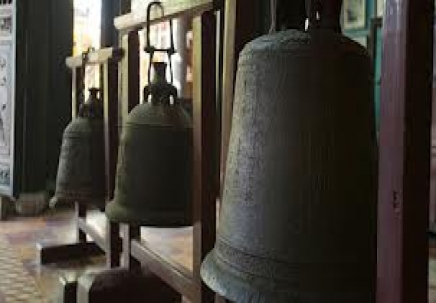
**Hoi An Museum of historic and cultural - This 300-year-old museum (which used to be a Quan Am Pagoda) provided a decent, albeit somewhat meager, overview of the city's history. Today, is secular displays traces local civilization through the early Sa Huynh culture, the Champa Empire, and the Dai Viet Era. Sadly, a poster and an old cannon are the main attractions.
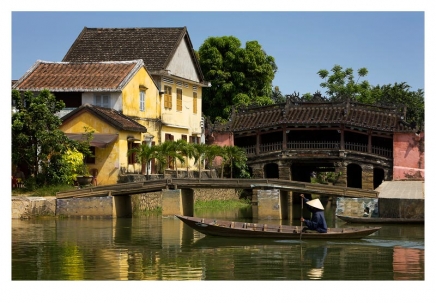
**Japanese Covered Bridge - The pink Japanese Covered Bridge, Hoi An's most famous symbol, is known locally as Chua Cau ("Pogoda Bridge"). Japanese traders built it in the early 17th century. The stone piles were meant to be driven into the heart of a monster, whose pesky tail supposedly caused earthquakes in Japan. Walking across the bridge today is free; entering its inner room requires your ticket but offers little to see
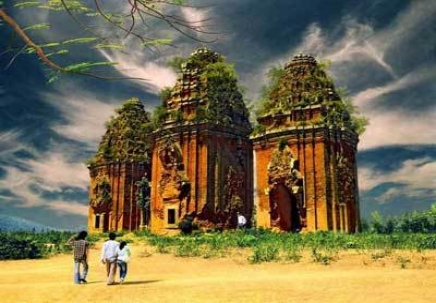
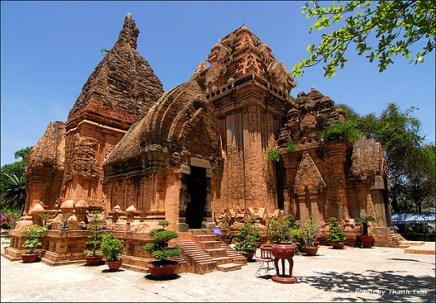
**My Son - Declared a UNESCO World Heritage Site in 1999, the ruins of My Son were once the major religious center of the ancient Champa Kingdom. These temples reveal the ancient integration of different cultures. The walls and pillars rising out of the jungle, as well as the image and sculptures, are a meeting point of Hindu and indigenous culture. The earliest artifacts date from the 4th century, though more permanent temples were not built until the 7th century. From the 7th to the 13th centuries, over 70 towers were built. Today, the ruins are organized into group A-H. Regrettably, there is little written description of the sights. The path from the entrance leads first to the E (7-8th century) and F groups, then to the G group. These groups do not offer much to see and are simply warm-up for the crown jewel B-C-D group. The C1 kalan (main tower) is the most prominent; the broad, rectangular D1 and D2 were once mandrapart (meditation chambers) for the Band C temples, respectively. Now they house a motley assortment of sculptures—unfortunately, he best has been moved to Da Nang's Cham Museum. US bombs reduc- ed the A1 tower—once a spectacular testament to 10th century Cham artistry—to a sad perimeter of stone. Today A1's best offering is a small rise which offers a picturesque view of the B-C-D group. As the ruins of My Son could be in better condition, it is recommen- ded to pay a visit to the Cham Museum in Da Nang first—this helps you to imagine the site in its full majesty. Also, it is advisable to arrive early to beat the swarms of visitors. Being along at My Son will allow you to appreciate the serene grace and beauty of the site.