

Excursions
Customized Full Day Tour in Beijing (Tianjin Port) (Trip#861209)


Customized Full Day Tour in Beijing (Tianjin Port) (Trip#861209)
(China)- Explore Beijing at your own pace during your customized full-day (10 hour) tour via private car.
- This trip includes:
- Round trip transportation from the cruise port
- English-speaking private guide/driver for 10 hours
- Admission tickets
- This trip excludes:
- Meals & Tips
TOUR DETAIL
Itinerary:
Explore the destination at your own pace with a private vehicle, driver and English-speaking guide at your service. This private tour gives you the flexibility to personalize your itinerary, customize your time ashore and discover the most interesting sights with the comfort and privacy. See below recommended points of interest; select the sight at your preference, consult our travel specialist your travel ideas or go beyond to create your own intimate connections and unique cultural encounters
Luxe De Asia will contact you after your purchase and finalize your itinerary prior to your departure. Our tour will start/end at the pier. Our mission is to maximize your fun time and bring you a memorable journey.
Recommended Points of interest:
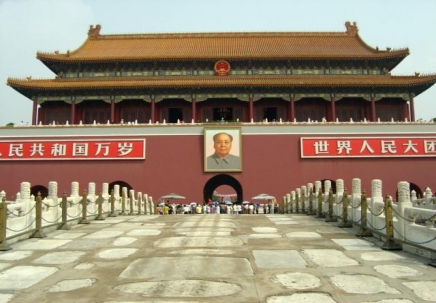
**Tiananmen Square is a large city square in the center of Beijing, China, named after the Tiananmen Gate (Gate of Heavenly Peace) located to its North, separating it from the Forbidden City. Tiananmen Square is the third largest city square in the world (440,000 m² - 880m by 500m or 109 acres - 960 by 550 yd). It has great cultural significance as it was the site of several important events in Chinese history.
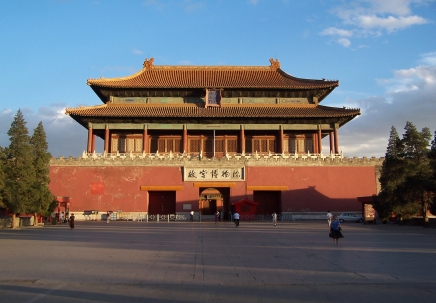
**The Forbidden City was the Chinese imperial palace from the Ming Dynasty to the end of the Qing Dynasty. It is located in the middle of Beijing, China, and now houses the Palace Museum. For almost 500 years, it served as the home of emperors and their households, as well as the ceremonial and political center of Chinese government.
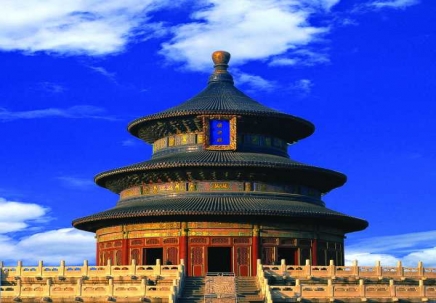
**The Temple of Heaven, literally the Altar of Heaven, is a complex of religious buildings situated in the southeastern part of central Beijing. The complex was visited by the Emperors of the Ming and Qing dynasties for annual ceremonies of prayer to Heaven for good harvest. It has been regarded as a Taoist temple, although Chinese Heaven worship, especially by the reigning monarch of the day, pre-dates Taoism.
**The Summer Palace (literally "Gardens of Nurtured Harmony") is a palace in Beijing, China. The Summer Palace is mainly dominated by Longevity Hill and the Kunming Lake. It covers an expanse of 2.9 square kilometres, three quarters of which is water.
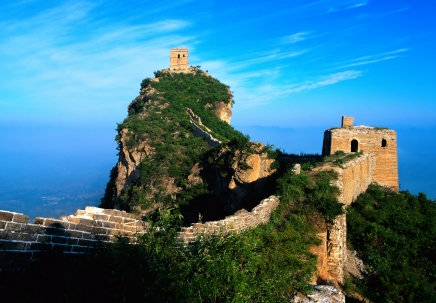
**The Great Wall of China is the longest and largest wall in the world . It is a series of fortifications made of stone, brick, tamped earth, wood, and other materials, generally built along an east-to-west line across the historical northern borders of China in part to protect the Chinese Empire or its prototypical states against intrusions by various nomadic groups or military incursions by various warlike peoples or forces. Several walls were being built as early as the 7th century BC; these, later joined together and made bigger, stronger, and unified are now collectively referred to as the Great Wall. Especially famous is the wall built between 220–206 BC by the first Emperor of China, Qin Shi Huang. Little of that wall remains. Since then, the Great Wall has on and off been rebuilt, maintained, and enhanced; the majority of the existing wall was reconstructed during the Ming Dynasty.
**The Ming Dynasty Tombs are located some 42 kilometers north-northwest of central Beijing, within the suburban Changping District of Beijing municipality. The site, located on the southern slope of Tianshou Mountain (originally Mount Huangtu), was chosen on the feng shui principles by the third Ming Dynasty emperor Yongle (1402–1424), who moved the capital of China from Nanjing to its the present location in Beijing. He is credited with envisioning the layout of the Ming-era Beijing as well as a number of landmarks and monuments located therein. After the construction of the Imperial Palace (the Forbidden City) in 1420, the Yongle Emperor selected his burial site and created his own mausoleum.
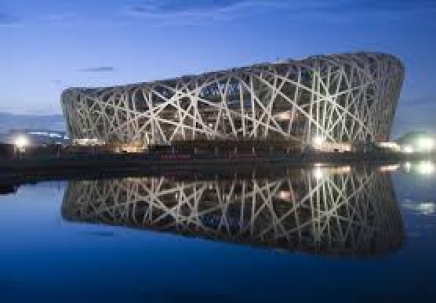
**The Olympic Site - The Olympic Green, an Olympic Park in Beijing was constructed for the 2008 Summer Olympics. The National Stadium ( bird's nest)hosted the main track and field Football, and final competitions for the 2008 Summer Olympics, as well as the opening and closing ceremonies. The twig-like structure and the bowl-shaped roof are the masterpiece of the project. It is designed by Herzog and DeMeuron. The most unique feature of the structure is its "cushion" system which can fill the spaces within the building's facade to regulate wind, weather, and sunlight. It can house 91,000 visitors.
**Hutongs are a type of narrow streets or alleys, most commonly associated with Beijing, China. In Beijing, hutongs are alleys formed by lines of siheyuan, traditional courtyard residences.[1] Many neighbourhoods were formed by joining one siheyuan to another to form a hutong, and then joining one hutong to another. The word hutong is also used to refer to such neighbourhoods.
**Peking Duck is a famous duck dish from Beijing[1] that has been prepared since the imperial era, and is now considered a national dish of China. The dish is prized for the thin, crisp skin, with authentic versions of the dish serving mostly the skin and little meat, sliced in front of the diners by the cook. Ducks bred specially for the dish are slaughtered after 65 days and seasoned before being roasted in a closed or hung oven. The meat is eaten with pancakes, scallion, and hoisin sauce or sweet bean sauce. The two most notable restaurants in Beijing which serve this delicacy are Quanjude and Bianyifang, two centuries-old establishments which have become household names.